Comment les rubans indicateurs de stérilisation contribuent-ils à améliorer la traçabilité des processus d'emballage dans la fabrication des dispositifs médicaux ?
Release time: 2026-10-30
Table des matières
Why Process Traceability Matters in Medical Device Sterilization
In medical device manufacturing, sterilization is not an isolated production step. It is part of a controlled process involving product preparation, packaging, sterilization, inspection, storage, and distribution.
Each stage needs to be properly documented and managed to maintain product quality and support traceability.
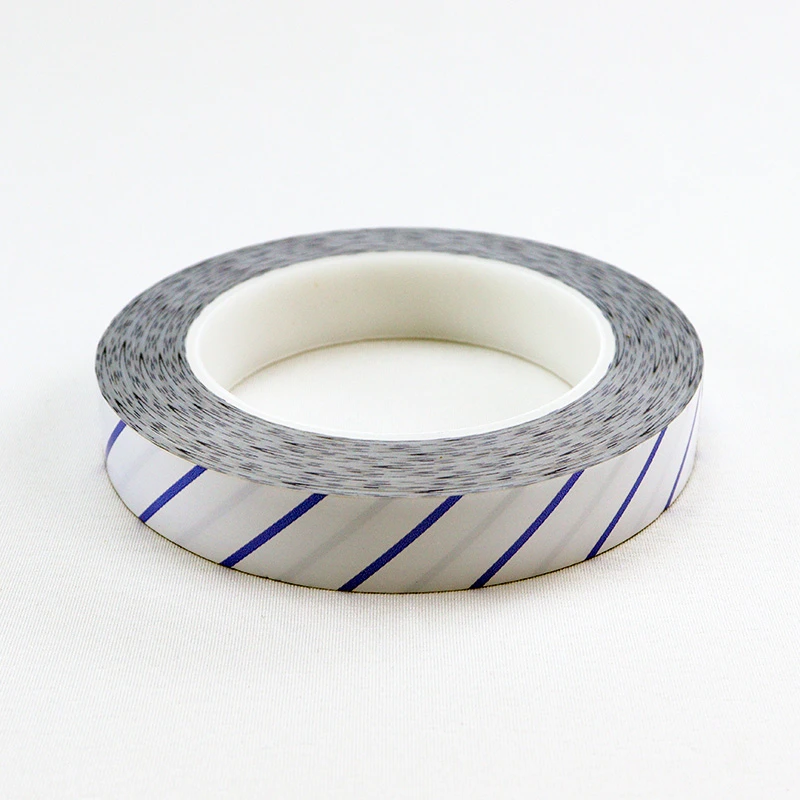
One practical tool used in this process is chemical indicator tape. It provides a visible indication that a packaged item or load has been exposed to certain sterilization process conditions. This helps production personnel distinguish processed items from unprocessed ones and supports routine workflow management.
However, indicator tape should not be confused with a complete sterilization monitoring system. A visible color change does not independently prove that a medical device is sterile or that all required sterilization parameters have been achieved.
For medical device manufacturers, selecting a suitable fournisseur de rubans indicateurs de stérilisation therefore involves more than comparing product prices or indicator colors. Buyers should understand the intended sterilization method, indicator performance, application requirements, and documentation needed for their quality management procedures.
How Do Sterilization Indicator Tapes Work in Packaging Operations?
Sterilization indicator tapes contain chemical indicator inks designed to respond to specified process conditions.
When exposed to the intended sterilization environment, the indicator ink undergoes a visible change, such as a color transition. This allows operators to identify whether an item or package has been exposed to the relevant process.
In routine packaging operations, indicator tapes can serve several practical functions.
Distinguishing Processed and Unprocessed Items
One of the most common applications is differentiating sterilized items from those that have not yet undergone sterilization.
For example, medical instrument packages may be prepared and sealed before being transferred to a sterilization area. Indicator tape applied to the package can provide a visible processing status after exposure to the intended sterilization cycle.
This helps reduce the risk of confusion when handling multiple batches or moving products between production areas.
However, the color change only indicates exposure to the specified conditions. It should not replace the release criteria established by the facility’s sterilization monitoring and quality management procedures.
Supporting Batch Identification and Workflow Management
In facilities processing multiple product types or sterilization loads, visual identification can make routine handling more organized.
Indicator tapes can be combined with batch labels, production records, and other identification systems to help personnel distinguish packages and track their movement through the manufacturing process.
For example, operators may use separate identification procedures for different sterilization loads, while batch numbers and cycle records provide the information needed to trace products back to their processing history.
The tape itself does not record the sterilization cycle number or complete batch information. Its value comes from being used as one part of a broader traceability system.
Reducing Handling Errors During Production
Medical device facilities often handle products at different stages of processing simultaneously.
Without clear identification, unprocessed and processed packages may be placed in the wrong storage areas or transferred incorrectly.
A visible chemical indicator can help operators recognize the processing status of packages during routine handling.
For better results, indicator tape should be incorporated into documented procedures covering package identification, sterilization load management, inspection, and product release.
Different Sterilization Methods Require Different Indicator Tapes
Chemical indicator products are designed for specific sterilization processes. A tape intended for steam sterilization should not automatically be used for hydrogen peroxide plasma sterilization or other methods.
Understanding the differences is essential when selecting indicator products.
Autoclave Steam Indicator Tape for Steam Sterilization
Steam sterilization uses saturated steam under controlled temperature, pressure, and exposure-time conditions.
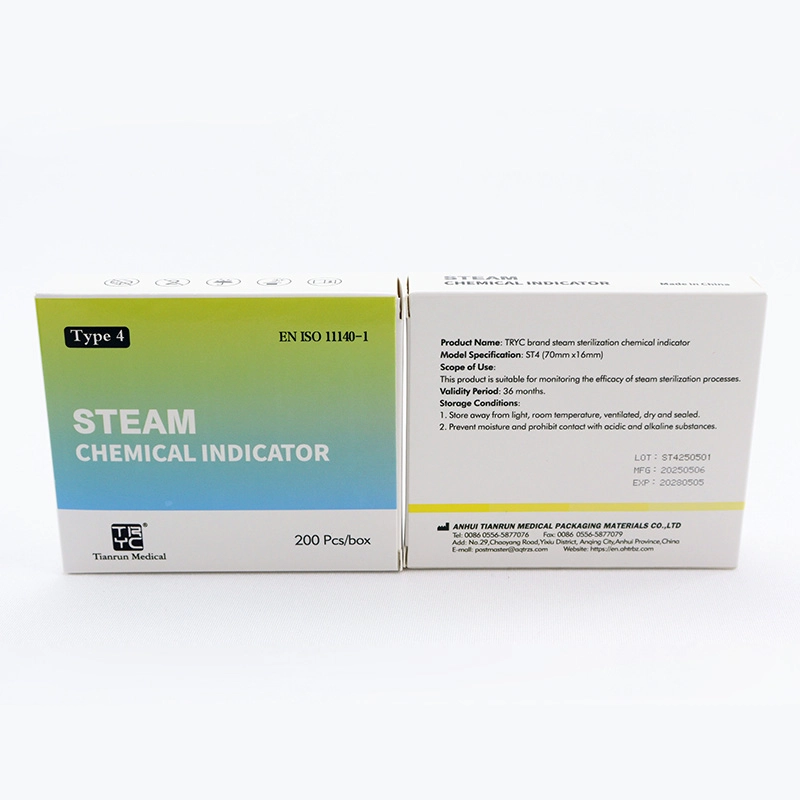
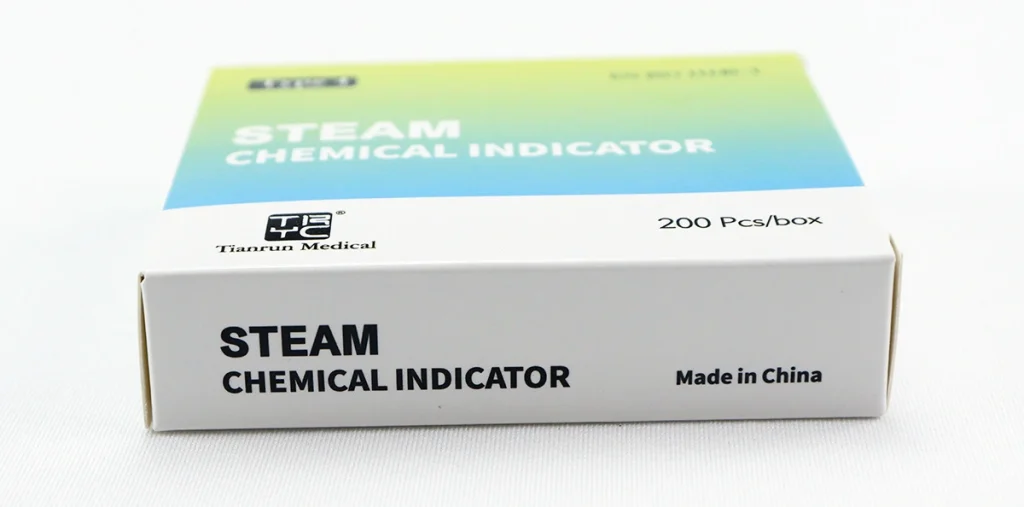
An ruban indicateur de vapeur d'autoclave is designed to respond to specified steam sterilization conditions and provide a visible indication of exposure.
It is commonly used on the outside of compatible packaging materials to help identify packages that have undergone a steam sterilization process.
When evaluating this type of tape, buyers should consider:
- Indicator response: The color change should be clear and consistent under the specified exposure conditions.
- Adhesion performance: The tape should remain securely attached to the intended packaging surface during the process.
- Print visibility: Indicator markings should remain distinguishable for routine inspection.
- Application compatibility: The adhesive and backing should be suitable for the intended packaging material and sterilization cycle.
- Storage stability: The product should maintain its specified performance under recommended storage conditions.
The indicator response should be interpreted according to the manufacturer’s instructions. A color change does not establish that the required sterilization conditions were achieved throughout the load.
VH2O2 Plasma Indicator Tape for Low-Temperature Sterilization
Vaporized hydrogen peroxide sterilization is used for compatible medical devices that require low-temperature processing.
UN VH2O2 plasma indicator tape is designed for use with the specified hydrogen peroxide sterilization process. Its indicator chemistry is different from that used in conventional steam indicator tapes.
This distinction matters because different sterilization methods expose indicator materials to different chemical and physical conditions.
When purchasing VH2O2 indicator tape, buyers should verify:
- Compatibility with the intended sterilization system.
- The specified indicator response and color transition.
- Adhesion to the packaging materials being used.
- Performance under the intended cycle conditions.
- Applicable product classification and technical documentation.
Not all hydrogen peroxide sterilization systems use identical process configurations. Therefore, compatibility should be confirmed against the intended equipment and cycle rather than assumed from the general product name.
Steam Indicator Tape vs. VH2O2 Plasma Indicator Tape
Although both products provide visual process indicators, they are designed for different sterilization environments.
| Comparison Factor | Bande indicatrice de vapeur pour autoclave | VH2O2 Plasma Indicator Tape |
|---|---|---|
| Intended process | Steam sterilization | Vaporized hydrogen peroxide sterilization |
| Main process conditions | Heat, moisture, and pressure | Low-temperature hydrogen peroxide exposure |
| Indicator chemistry | Formulated for specified steam conditions | Formulated for specified VH2O2 conditions |
| Typical application | External identification of steam-processed packages | External identification of compatible VH2O2-processed packages |
| Selection priority | Steam cycle compatibility and adhesion | VH2O2 system compatibility and indicator performance |
| Interchangeability | Not interchangeable with VH2O2-specific tape | Not interchangeable with steam-specific tape |
For facilities using multiple sterilization technologies, maintaining clearly separated indicator products and handling procedures can help reduce selection errors.
How Indicator Tapes Fit into a Medical Device Traceability System
Indicator tapes are most useful when integrated into a structured quality management process.
Their role is primarily visual identification and process exposure indication. Other records and monitoring tools are needed to establish a more complete picture of sterilization performance.
Combining Indicator Tapes with Batch Records
A batch record should contain enough information to identify the products and connect them with their relevant manufacturing and sterilization history.
Depending on the facility’s procedures, this information may include:
- Product name and reference number.
- Production batch or lot number.
- Packaging date and operator identification.
- Sterilization load or cycle identification.
- Sterilization date and equipment identification.
- Relevant cycle records and monitoring results.
- Inspection and product release status.
The indicator tape provides a visible reference during package handling, while the documented records provide the information needed for investigation and traceability.
If a quality issue is identified after processing, these records help manufacturers determine which products and sterilization loads may be affected.
Understanding the Difference Between Chemical and Biological Indicators
Chemical indicators and biological indicators serve different purposes in sterilization monitoring.
Chemical indicators respond to one or more specified process variables. They provide a visual or measurable indication that the relevant conditions have been encountered.
Biological indicators, on the other hand, contain defined populations of resistant microorganisms and are used to evaluate the effectiveness of a sterilization process under specified conditions.
These tools should not be treated as substitutes for each other.
In addition, chemical indicators are classified according to their intended use and performance requirements under relevant standards, such as ISO 11140-1.
For example, a process indicator used for distinguishing processed from unprocessed items has a different purpose from a multi-parameter or integrating chemical indicator.
A manufacturer should select indicator products according to the applicable monitoring requirements rather than relying on color change alone.
Establishing Consistent Inspection Procedures
Indicator tape performance is useful only when personnel understand how to interpret it.
Facilities should establish documented procedures covering:
- The correct indicator tape for each sterilization method.
- Application location and surface compatibility.
- Expected color change according to product instructions.
- Inspection criteria after sterilization.
- Handling of unclear, incomplete, or unexpected indicator responses.
- Documentation and escalation of process deviations.
If the indicator does not show the expected response, the package should be handled according to the facility’s established nonconformance and investigation procedures.
What Should Buyers Evaluate When Selecting a Sterilization Indicator Tapes Supplier?
For medical device manufacturers and sterilization service providers, supplier selection should focus on product consistency, technical specifications, and application suitability.
A supplier that offers different indicator tape products should also be able to explain their intended use and limitations.
Indicator Performance and Product Specifications
Buyers should request technical specifications covering the indicator’s intended sterilization method, response characteristics, application conditions, and storage requirements.
Important information includes:
- Indicator type and intended use.
- Initial and expected final indicator appearance.
- Recommended sterilization conditions.
- Tape width and roll length.
- Adhesive characteristics.
- Shelf life and storage conditions.
- Relevant product standards and test documentation.
The exact specifications should match the facility’s operating procedures and equipment.
Adhesion and Compatibility with Packaging Materials
Indicator tape needs to remain attached to the intended surface during routine handling and the sterilization process.
Poor adhesion may cause the tape to loosen, curl, or detach, making visual inspection more difficult.
Buyers should evaluate the tape on the actual packaging materials used in production, such as compatible paper-based packaging, nonwoven materials, or other approved surfaces.
Adhesive performance should be assessed under the specified application and processing conditions rather than through a simple room-temperature test alone.
Production Consistency and Batch Documentation
For facilities purchasing indicator tape regularly, consistency between batches is important.
Differences in indicator response, adhesive performance, or product dimensions may affect routine operations.
Before establishing a long-term supply relationship, buyers should review:
- Quality management procedures.
- Incoming raw material controls.
- Production and process inspection records.
- Finished-product testing procedures.
- Batch identification and traceability.
- Product packaging and storage instructions.
It is also useful to request samples for evaluation before confirming larger orders.
Customization and Supply Requirements
Different manufacturing facilities may have different requirements for tape width, roll length, packaging quantities, and labeling.
Some buyers may also require specific product identification or packaging arrangements for warehouse management.
When requesting a quotation, provide the intended sterilization method, required tape specifications, estimated monthly consumption, and preferred packaging format.
This allows the supplier to assess whether the available product configuration matches the customer’s actual operating requirements.
Common Mistakes to Avoid When Using Sterilization Indicator Tapes
Even a suitable indicator tape may be used incorrectly if application and inspection procedures are not properly established.
Using the Wrong Tape for the Sterilization Method
Steam and VH2O2 sterilization require different indicator products. Using an indicator designed for one process in another may result in an unreliable or misleading response.
Always confirm the intended application before purchasing or using a product.
Treating Color Change as Proof of Sterility
A visible indicator response confirms exposure to specified process conditions, not sterility of the package contents.
Sterility assurance requires a validated process and appropriate monitoring, documentation, and release procedures.
Ignoring Storage and Expiration Requirements
Chemical indicator performance may be affected by unsuitable storage conditions or use beyond the specified shelf life.
Buyers and production managers should follow the manufacturer’s storage instructions and establish inventory controls to prevent expired products from entering production.
Failing to Connect Indicators with Batch Records
Indicator tape alone cannot provide complete product traceability.
Without batch identification, sterilization records, and inspection documentation, it becomes difficult to reconstruct the processing history of a specific product.
Integrating indicator use into existing quality management procedures is therefore essential.
Foire aux questions
Can autoclave steam indicator tape be used for VH2O2 plasma sterilization?
No. Steam indicator tape is formulated for specified steam sterilization conditions, while VH2O2 plasma indicator tape is designed for hydrogen peroxide-based processes. They should not be interchanged unless the manufacturer explicitly confirms suitability for the intended application.
Does a color change on sterilization indicator tape mean the medical device is sterile?
No. The color change indicates exposure to specified process conditions. It does not independently prove sterilization effectiveness or establish sterility. Facilities must follow validated sterilization procedures and their established monitoring and release requirements.
What should I provide when ordering sterilization indicator tapes in bulk?
Provide the sterilization method, required tape type, dimensions, roll length, packaging preferences, estimated order quantity, and any relevant equipment or application requirements. If you are replacing an existing product, a sample or technical specification can help the supplier assess compatibility.
How should sterilization indicator tapes be stored?
Follow the manufacturer’s recommended temperature, humidity, light exposure, and shelf-life requirements. Keep products in their original packaging when appropriate and use inventory controls to avoid expired or improperly stored materials.
Choosing the Right Indicator Tape for Reliable Process Management
Sterilization indicator tapes support visual identification and routine process management in medical device manufacturing. Their effectiveness depends on selecting the correct indicator for the sterilization method, verifying application compatibility, and integrating the product into documented inspection and traceability procedures.
For buyers, evaluating a supplier should involve more than checking the color-change performance. Adhesion, product consistency, technical documentation, storage requirements, and long-term supply capability are also important considerations.
Tianrun provides sterilization indicator tape products for different sterilization applications. Medical device manufacturers and sterilization service providers can discuss their process requirements and product specifications with Tianrun when evaluating suitable indicator tape options.