Comparison of Commonly Used Sterilization Monitoring Methods in Hospitals: Biological Indicators vs. Chemical Indicators
Release time: 2025-11-25
In hospital Central Sterile Supply Departments (CSSDs), sterilization monitoring is a crucial quality management. With the increase in surgical instruments and reusable medical devices, ensuring sterilization effectiveness has become a key concern for various medical institutions. Currently, the most common sterilization monitoring methods in hospitals are mainly divided into two types: biological indicators and chemical indicators. Tianrun will conduct a comparative analysis of the two to provide a reference for medical staff, institutional managers, and equipment procurement personnel.
Biological Indicators: The “Gold Standard” Based on Microbial Inactivation
Biological indicators (BI) are carriers containing specific heat-resistant spores used to verify whether the sterilization process can truly kill microorganisms. Regardless of whether the hospital uses steam sterilizers, plasma sterilizers, or dry heat sterilization equipment, biological indicators are considered the most reliable verification method. Among them, steam biological indicators are the most frequently used monitoring tool in hospitals.
Advantages of Biological Indicators:
High Reliability: Determining sterilization effectiveness by detecting spore viability is the internationally recognized “gold standard” for sterilization efficacy verification.
Close to Real-World Conditions: Accurately reflects whether the temperature, pressure, and humidity within the sterilization chamber meet standards.
Suitable for Sterilization Qualification Validation (Verification): Biological indicators are commonly used for verification during PQ (Proof-of-Quality) validation after sterilizer installation and maintenance.
Possible Limitations:
Cultivation and detection require a certain time (traditional 24–48 hours).
Standardized usage and recording are required to avoid human error.
With technological advancements, many hospitals have begun using rapid steam biological indicators (CI), which provide results quickly, significantly improving work efficiency.
Chemical Indicators: A Fast and Intuitive Process Monitoring Method
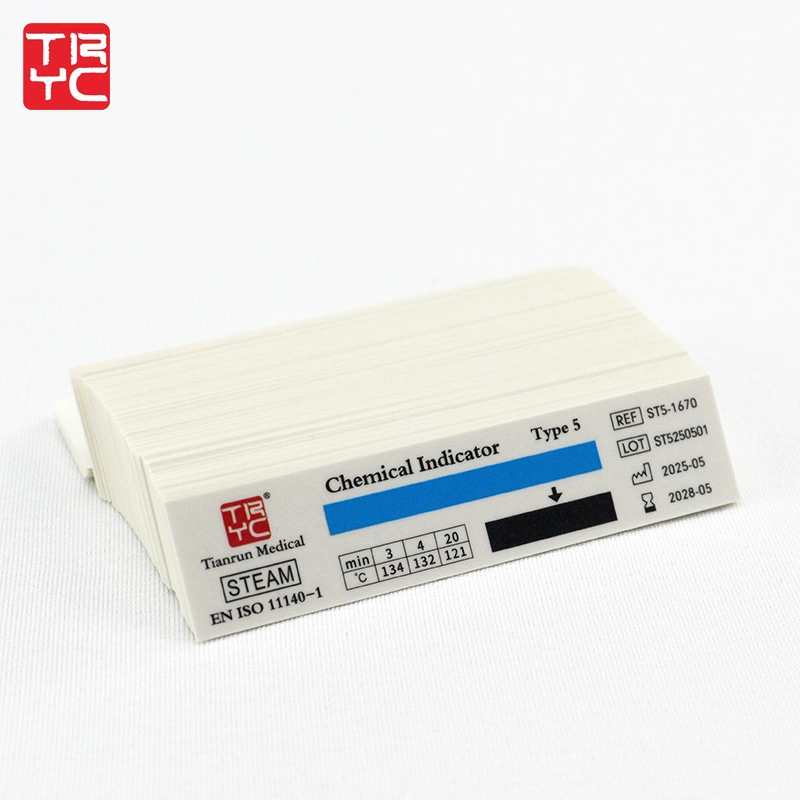
Chemical indicators (CI) use heat, humidity, or chemical reactions to indicate whether the sterilization environment meets set conditions. Common forms include in-package indicator cards, sterilization tape, and multi-parameter indicator cards.
Advantages of Chemical Indicators:
Rapid Reaction: The expected temperature, time, or steam state can be determined immediately after sterilization.
Easy to Use and Low Cost: Suitable for daily monitoring and routine testing of each package of instruments.
Intuitive Visualization: Color changes allow healthcare personnel to identify the effect immediately.
Limitations of Chemical Indicators:
Cannot determine whether sterilization has truly killed microorganisms.
Cannot replace biological indicators as the final basis for determining sterilization effectiveness.
Therefore, chemical indicators are more suitable as process monitoring tools than as the final basis for determining sterilization success.
Biological Indicators VS Chemical Indicators: How to Use Them in Hospitals?
In standard hospital procedures, two sterilization monitoring methods are typically used simultaneously, but with different focuses:
| Project | Biological Indicators (BI) | Chemical Indicators (CI) |
|---|---|---|
| Monitoring Nature | Sterilization Effect Verification | Sterilization Process Monitoring |
| Basis for Judgment | Spore Inactivation | Conditions Meeting the Standards |
| Reliability | Highest | High but Limited |
| Use Scenarios | Weekly Monitoring, Sterilizer Validation, Batch Confirmation | Package Monitoring, Each Cycle Monitoring |
| Cost-effectiveness | High Cost | Low Cost |
In steam sterilization scenarios, hospitals use a combination of tools such as steam biological indicators, rapid biological indicators, and steam chemical indicator cards to ensure comprehensive monitoring from sterilization conditions to final sterilization effectiveness.
How to choose the most suitable sterilization monitoring solution for your hospital?
Follow industry standards: Medical guidelines in most regions recommend using steam biological indicators at least once a week.
Hospitals with high surgical volumes are advised to increase the frequency, especially for high-risk instrument batches, which should use rapid BI for enhanced validation.
Chemical indicators should be used for every pack to ensure sterilization conditions meet standards.
New sterilizers or those that have undergone repair must be validated using biological indicators to ensure reliable equipment performance.
For medical institutions, a proper combination of steam biological indicators, rapid biological indicators, and multi-parameter chemical indicators is essential to establishing a comprehensive sterilization quality management system.